
Celebrating National Intravenous Nurse Day
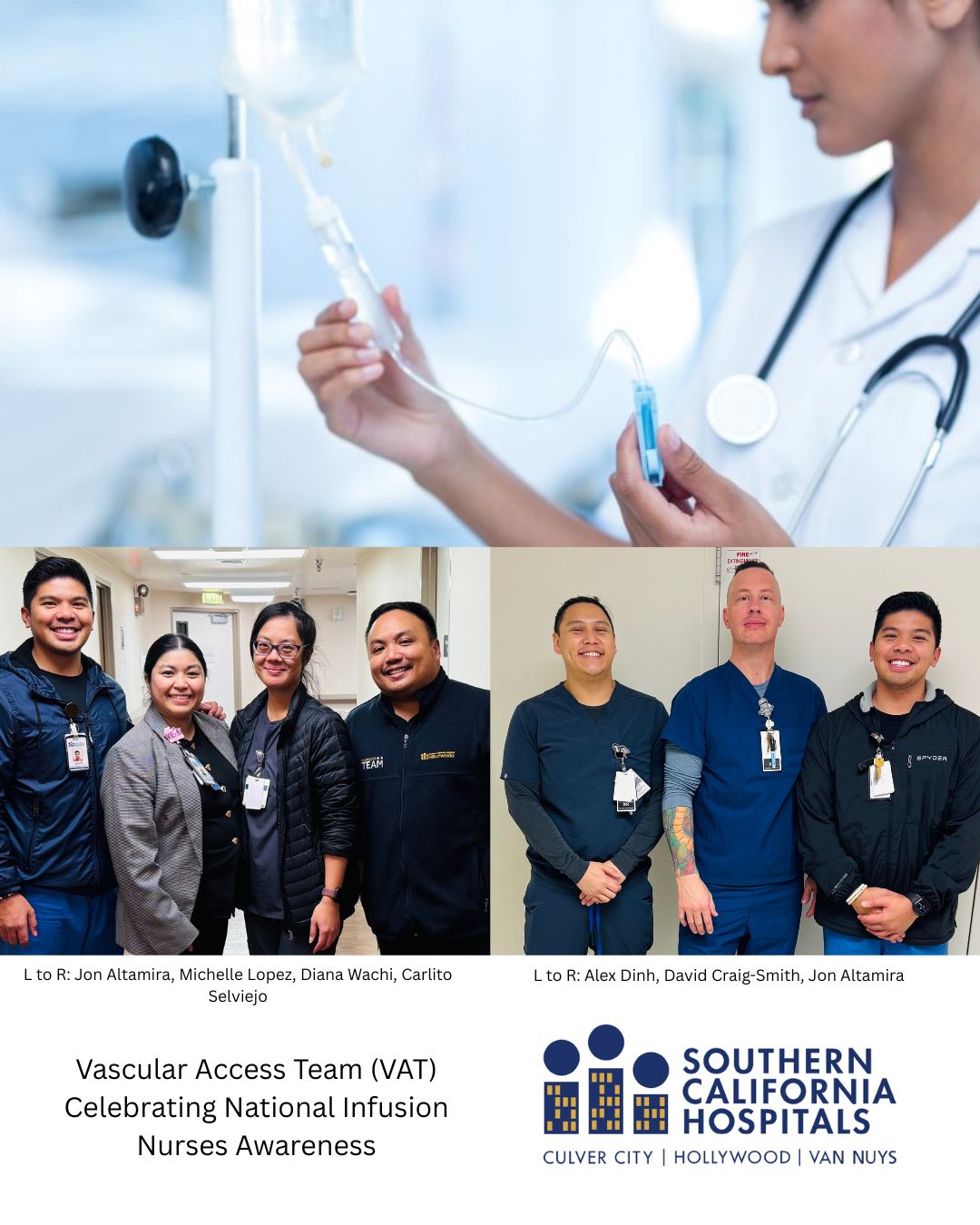
Precision and Compassion: The Vital Importance of the Hospital Infusion Nurse at Southern California Hospitals
In the complex ecosystem of modern healthcare at Southern California Hospital at Culver City and Hollywood, the delivery of medication has moved far beyond simple pills and injections. Today, life-saving treatments from biologics to advanced nutrition and hydration—are increasingly delivered directly into the bloodstream. At the heart of this critical intersection between technology and patient care is the infusion (IV) nurse. Often unsung, these specialists are the gatekeepers of vascular access and the architects of safe, effective intravenous therapy.
While many healthcare professionals are trained to start a basic peripheral IV, the infusion nurse possesses a deep of knowledge that transcends the physical act of "sticking" a patient. Their expertise encompasses:
Vascular Access Device (VAD) Selection: Infusion nurses assess a patient’s venous health, the pH and osmolarity of the prescribed medication, and the anticipated duration of therapy to choose the right tool whether it’s a standard IV, a PICC line, or an implanted port.
Pharmacology Expertise /Technical Mastery: They must understand the nuances of vesicants (drugs that cause tissue damage if they leak) and incompatibilities between multiple concurrent infusions. Modern infusion involves sophisticated smart pumps and ultrasound-guided insertion techniques. The infusion nurse ensures these tools are used to their maximum safety potential.
Guardians of Hospital Patient Safety
Within the hospital setting, the stakes of infusion therapy can be high. A single error in dosage or a lapse in sterile technique can lead to systemic infections (CLABSI), air embolisms, or severe tissue necrosis.
Infusion nurses serve as a final, critical safety check. By adhering to rigorous evidence-based standards, they significantly reduce the rates of hospital-acquired infections, which saves lives and reduce the financial burden on the healthcare system. Their vigilance in monitoring for immediate adverse reactions, such as anaphylaxis, and long-term complications like phlebitis or thrombosis, prevents "failure to rescue" scenarios that are critical to hospital quality metrics.
Integration into the Multidisciplinary Team
At Southern California Hospital at Culver City and Hollywood the infusion nurse acts as a vital consultant to physicians, pharmacists, and floor nurses. Their role includes:
· Vascular Access Teams (VAT): Dedicated teams that respond to difficult starts across the hospital, reducing the need for multiple attempts by non-specialized staff.
· Emergency Response: In critical care or trauma situations, infusion specialists provide rapid, reliable access when seconds count.
· Antibiotic Stewardship: They assist in managing complex IV antibiotic regimens, ensuring that the delivery method matches the severity and duration of the infection.